
Featured
Last news
2026 S-Class starry facelift
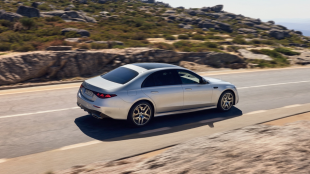
When Mercedes‑Benz unveiled the 2026 S‑Class, it was clear that this was no ordinary facelift. Engineers replaced or refined more than 2,700 components, meaning over half of the vehicle is new. The changes begin on the outside: a 20 percent larger grille filled with hot‑stamped chrome stars projects a grander presence, while the traditional hood ornament now illuminates as part of the car’s striking light signature. Mercedes’ trademark three‑pointed star motif also appears in the headlights and taillights, underscoring the brand identity with refined opulence. Optional 20‑inch cross‑spoke wheels use high‑pressure casting to reduce weight and material consumption, and customers can choose from more than 150 paint colours.Digital light and starry illuminationLighting technology takes centre stage on the facelifted S‑Class. New micro‑LED Digital Light headlamps cut energy consumption in half while offering ultra‑range high beams that illuminate up to 600 metres ahead. The headlamps and taillamps embed miniature three‑pointed stars in their lenses, and the lights can project patterns such as welcome animations or warnings for oncoming drivers. These lamps are paired with a 20 percent larger grille outlined by a luminous frame and an illuminated bonnet star. At the rear, triple‑pod taillights with a star pattern and chrome accents contribute to a wider stance.An interior defined by screens and AIInside, the S‑Class adopts the MBUX Superscreen architecture. A 14.4‑inch central display is flanked by twin 12.3‑inch screens—one for the driver and another for the front passenger—forming a sweeping glass surface. Rear passengers enjoy two 13.1‑inch high‑definition displays with built‑in cameras. Mercedes’ latest software platform, MB.OS, underpins the cabin: it unifies navigation, vehicle systems and voice assistants. Generative AI powers the “Hey Mercedes” virtual assistant, enabling complex dialogue through voice assistants based on ChatGPT‑4o and Google Gemini. Navigation relies on Google Maps‑based data to provide real‑time traffic and 3‑D surroundings. Even the air vents are electronically controlled through Digital Vent Control, and an updated Energizing Air Control system filters cabin air for maximum purity.Comfort innovationsAlthough the cabin brims with screens, Mercedes preserved its luxurious ambience. Heated seatbelts can warm occupants to 44 °C (111 °F), while detachable remote controls allow rear passengers to adjust seat functions, climate and entertainment. The expanded Manufaktur programme offers nearly 50 bespoke paint finishes and 25 leather options, emphasising individuality. The interior retains high‑quality materials and adds Digital Vent Control for precise airflow. Mercedes has also equipped up to 10 external cameras, five radar sensors and twelve ultrasonic sensors, enabling advanced driver assistance and environment awareness.Handling and suspensionThe 2026 S‑Class comes standard with rear‑wheel steering that turns the rear wheels up to 4.5 degrees, reducing the turning circle by nearly two metres. Buyers can upgrade to an optional 10‑degree system for even tighter manoeuvrability. E‑Active Body Control, an active suspension that reads the road ahead, uses cloud‑sourced Car‑to‑X data to adjust damping at each wheel and can lift the car within milliseconds to mitigate side‑impact forces. This predictive suspension works alongside AIRMATIC air springs and electronically controlled dampers, delivering a blend of comfort and agility.
All-new Ioniq 3 coming in 2026
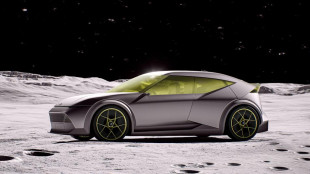
Hyundai is preparing to launch the Ioniq 3, a compact EV that will slot below the Ioniq 5. Inspired by the Concept Three unveiled in 2025, the production car will ride on a 400‑volt version of the E‑GMP platform and feature pixelated LED lighting, active aero shutters and a lounge‑like cabin. Two battery options are expected: a 58.3 kWh pack yielding around 270 miles of range and an 81.4 kWh pack delivering roughly 375 miles (WLTP). A front‑mounted motor producing about 201 hp should propel the car to 60 mph in roughly 7.5 seconds with a top speed near 105 mph. Vehicle‑to‑load bidirectional charging will be included.Hyundai is also reportedly developing a high‑performance Ioniq 3 N with dual motors and 288 bhp for a sub‑six‑second 0–60 mph time. The infotainment system will debut the new Pleos software, enabling over‑the‑air updates and Apple CarPlay Ultra. Designers intend to create a “living room” interior with flexible seating and sustainable materials.
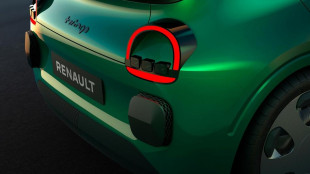
New Twingo e-tech is at the starting line
Renault has reimagined its iconic Twingo as a purely electric city car. Built on the AmpR Small platform, the new model uses a lithium‑iron‑phosphate battery with 27.5 kWh of usable capacity and an 80 hp motor. This combination gives a WLTP range of about 163 miles (approximately 263 km). Standard charging is via a 6.6 kW AC charger, with options for 11 kW AC and 50 kW DC; the latter takes the battery from 10 to 80 percent in 30 minutes. A one‑pedal mode delivers strong regeneration for urban driving.The Twingo E‑Tech is slated to hit the European market in early 2026 with a target price below €20,000. Early adopters can secure an R Pass from December 2025, gaining priority ordering and perks such as a 1:43 scale model and early test drives. Inside, a seven‑inch digital instrument cluster is paired with a ten‑inch infotainment screen running Google services and voice control. Sliding rear seats allow the boot to expand to 360 litres, and up to 24 driver‑assistance systems—including automated emergency braking and lane‑keeping—make this tiny EV surprisingly sophisticated.
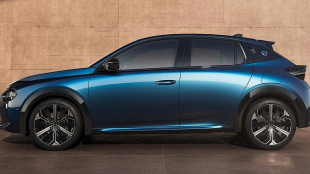
New Ypsilon and Ypsilon hf
Lancia’s revival begins with an all‑new Ypsilon supermini. Built on Stellantis’s CMP platform, it comes as a battery‑electric or 48‑volt mild‑hybrid. The electric Ypsilon uses a 51 kWh battery and a front‑mounted motor rated at 115 kW (156 hp), delivering up to 403 km of WLTP range and more than 500 km in urban use. DC fast charging takes the battery from 20 to 80 percent in 24 minutes, or adds 100 km of range in 10 minutes, while consumption is rated at 14.3–14.6 kWh/100 km. The mild‑hybrid pairs a 1.2‑litre three‑cylinder with a 48‑V system to produce 100 hp and achieve 0–100 km/h in 9 seconds.The cabin is co‑created with furniture maker Cassina, combining sustainable textiles with a minimalist design. Lancia’s SALA (Sound Air Light Augmentation) interface manages lighting, climate and media across dual displays. Half of the surfaces passengers touch are made from recycled or eco‑friendly materials. Outside, the Ypsilon wears a reinterpretation of Lancia’s grille, round Stratos‑inspired rear lights and clean lines.
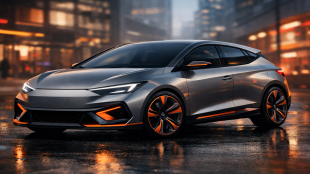
The Cupra Raval will be launched in 2026
The Cupra Raval translates Cupra’s rebellious spirit into an urban electric hatch. Derived from the UrbanRebel concept, it rides on the Volkswagen Group’s MEB+ architecture and will be built in Martorell. Launching in early 2026, the Dynamic and Dynamic Plus versions deliver 210 hp and up to 450 km of range, while the VZ Extreme pushes output to 226 hp and adds an electronic limited‑slip differential and adaptive chassis tuning.Two battery sizes—expected around 38 kWh and 56 kWh—will enable sub‑7‑second 0–62 mph acceleration. Styling borrows from the edgy UrbanRebel with angular headlamps, bold creases and copper‑coloured details. Inside, a driver‑focused cockpit features configurable digital instruments, a large infotainment screen and an optional 12‑speaker Sennheiser audio system.
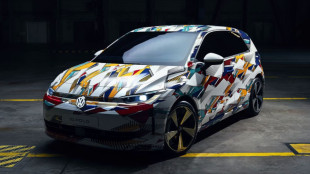
New id.Polo comes electric
Volkswagen’s ID.Polo ushers the iconic Polo name into the electric age. Pre‑sales begin at the end of April 2026. Built at the Martorell plant in Spain, the compact five‑door model is the first production car on VW’s updated MEB+ platform. Pricing will start below €25,000.Customers can choose between 37 kWh and 52 kWh batteries powering 85 kW, 99 kW or 155 kW motors; the GTI variant with 166 kW arrives later. The larger battery delivers up to 450 km of range and supports DC charging at up to 130 kW. New assistance systems include Travel Assist with traffic‑light and stop‑sign recognition.
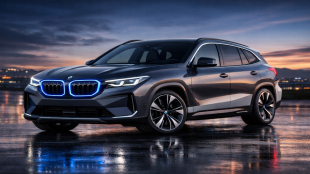
BMW iX3 new style and design
BMW’s iX3 heralds the Neue Klasse era. Revealed at CES 2026, the pre‑production SUV features a dual‑motor powertrain delivering 345 kW/469 hp and 645 Nm of torque, launching from 0–100 km/h in 4.9 seconds with a 210 km/h top speed. Sixth‑generation BMW eDrive technology introduces cylindrical cells and an 800‑volt battery with 108.7 kWh usable capacity, enabling up to 805 km of WLTP range.Ultra‑fast charging adds 372 km in 10 minutes at 400 kW DC stations. Charging from 10 to 80 % takes just 21 minutes, and the NACS port provides access to the Tesla Supercharger network with an optional 22 kW AC charger. Bidirectional charging (V2L, V2H and V2G) turns the iX3 into a mobile power bank or home energy store.Inside, the Panoramic iDrive spans the windscreen with a 43‑inch projection display and a 17.9‑inch infotainment screen. The AI‑powered Intelligent Personal Assistant, enhanced with Amazon Alexa+, allows natural voice interaction and controls vehicle functions. Sustainable materials contribute to a greener footprint, with recycled plastics and aluminium used in components. A flat floor improves space; the iX3 offers a 510‑litre boot plus a 58‑litre front trunk.
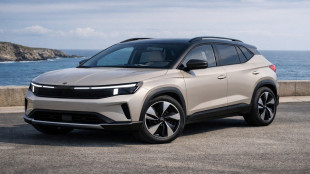
New Skoda Epiq: modern with range
Skoda’s Epiq is the first series‑production vehicle to fully adopt the brand’s new Modern Solid design language. Previewed as a show car in September 2025, the compact city SUV rides on Volkswagen’s MEB Entry platform and measures around 4.1 metres in length. Despite its small footprint, it seats five and provides a generous 475‑litre boot. Skoda aims to offer an affordable electric alternative to its conventional Kamiq with a targeted starting price of about €25,000. Production is slated to begin in Navarra, Spain, with sales expected in late 2026.Different battery sizes (around 38 kWh to 56 kWh) will deliver a WLTP range of up to 425 km. The platform is shared with the upcoming VW ID.Polo and Cupra Raval, ensuring competitive efficiency and low running costs. Externally, the Epiq is defined by its Tech‑Deck face with T‑shaped LED daytime running lights and a pronounced tornado line along the flanks. Cashmere matte paintwork combines with black accents to convey robustness.