Anzhi Technology Begins Mass Production of Electronically Controlled Shock Absorbers

Anzhi Technology announced the completion of its capacity ramp-up for electronically controlled shock absorbers, having delivered more than 10,000 units for vehicle installation this year. Speaking at the 2026 Automotive AI Smart Chassis Conference in Munich, company officials outlined plans to begin mass production of dual-valve systems next year and fully active suspension by 2027.
Anzhi Technology has completed its capacity ramp-up for electronically controlled shock absorbers, delivering over 10,000 units for vehicle installation this year. The company plans to begin mass production of dual-valve shock absorbers next year and fully active suspension by 2027.
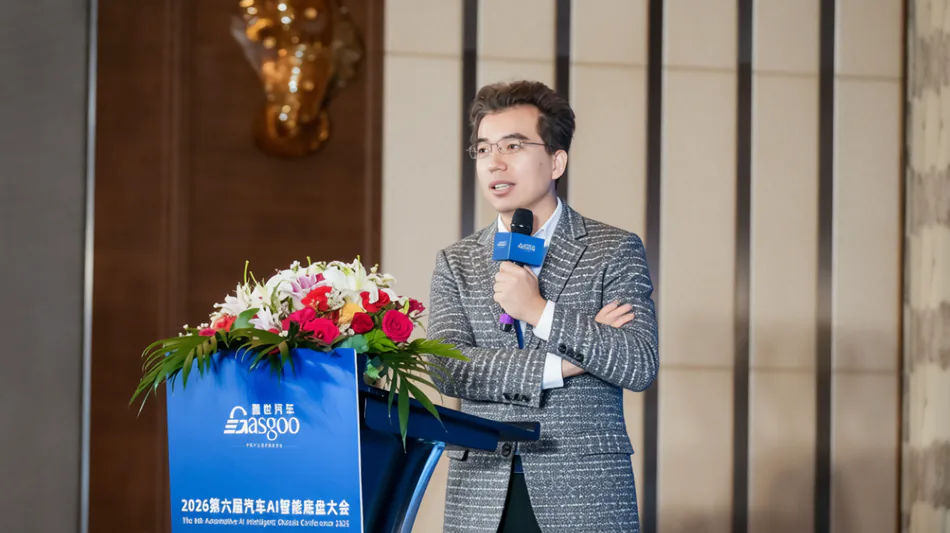
Sun Anning, head of the electronically controlled shock absorber product line and chief technology officer at Anzhi Technology, announced these developments at the 2026 6th Automotive AI Smart Chassis Conference in Munich on November 19. He stated that the company has achieved scaled mass production and delivery across its full product portfolio, which includes suspension control algorithms, suspension controllers, closed-air-spring compressors, and electronically controlled shock absorbers.
Since entering mass production in 2023, Anzhi’s air spring and shock absorber control algorithms have been deployed in over 500,000 units. Cumulative shipments of closed-air-spring compressors have reached nearly 500,000 units. With orders increasing, Sun noted that compressor capacity is currently tight, prompting the imminent installation of a third fully automated production line.
Sun also presented market data on electronically controlled shock absorbers based on automaker configurations and retail figures. From January to October 2026, an estimated 2.934 million units were installed in Chinese passenger vehicles, accounting for 19.5% of passenger vehicle retail sales during that period. October alone saw approximately 340,000 installations.
Adoption of dual-valve products is expanding. In the first ten months of this year, cumulative installations of dual-valve electronically controlled shock absorbers reached roughly 267,000 units. October installations totaled about 45,000 units, representing 13.3% of all shock absorber installations that month. Models such as the AITO M9 and ZEEKR 9X already feature dual-valve systems as standard equipment, and the technology is being integrated into more nameplates.
Sun stated that the cost and maturity of the local supply chain for electronically controlled shock absorbers are now sufficient for broader adoption. Some models with official starting prices below 110,000 yuan already offer these components as standard. Going forward, single-valve products will penetrate wider price segments, while dual-valve systems will target higher-end chassis control demands by decoupling compression and rebound damping to improve comfort and handling.
F.P.Kavanaugh--IP