Toyota Unveils Hyper Z Prototype: An Aerodynamic Tribute to Thai Pickup Culture

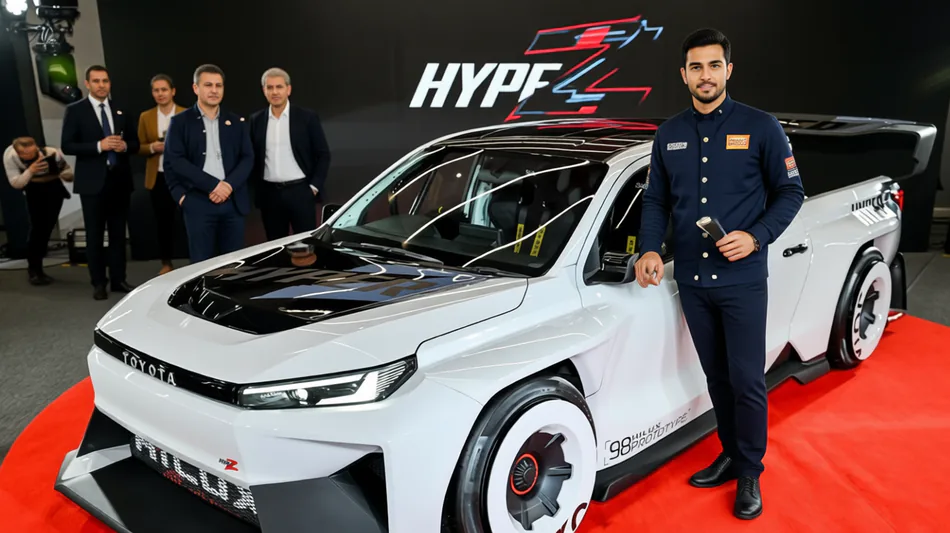
Toyota has unveiled the Hyper Z prototype, a one-off modification of its Hilux pickup truck designed to honor Thailand’s vibrant custom vehicle culture. Built by Toyota’s Australian design department, the vehicle replaces its cargo bed with a large aerodynamic wing and features extreme wide-body styling, serving as a conceptual showcase rather than a production model.
Toyota has unveiled the Hyper Z prototype, a radical reinterpretation of its Hilux pickup truck that replaces the vehicle’s cargo bed with a massive aerodynamic wing. The one-off concept was developed by Toyota’s Australian design department to celebrate the country’s unique and highly customized pickup truck culture in Thailand.
While the Hilux is renowned globally for its rugged durability—a reputation cemented by its appearance on the television program Top Gear, where it survived being drowned, blown up, and set on fire—it is rarely associated with high performance. However, in Southeast Asia, particularly Thailand, the pickup truck serves as more than a work tool; it is a canvas for personal expression. Thai customizers are known for creating extreme builds that rival those seen at major international automotive events like SEMA in Las Vegas or the Daikoku Parking Area in Japan.
The Hyper Z prototype embodies this ethos with aggressive styling cues that push far beyond standard utility vehicle design. The vehicle features massively wide bodywork designed to accommodate 325/35 series tires mounted on 22-inch wheels. Aerodynamic elements are extensive, including a large front splitter, ground effects tucked beneath the chassis, a rear diffuser, and a substantial wing structure at the rear.
Most notably, the traditional pickup bed has been entirely occupied by an X-shaped aerodynamic wing that spans the width of the vehicle. This design choice effectively eliminates cargo capacity, underscoring the prototype’s role as a conceptual statement rather than a practical workhorse. Toyota did not release specific power figures for the Hyper Z, though it retains the 2.4-liter turbo-diesel engine found in the standard Hilux Travo model, which produces 150 horsepower.
The prototype also highlights differences in how Toyota markets the Hilux across global regions. In international markets, the truck is available in both high-floor and low-floor configurations, with the latter designed to facilitate easier loading and unloading for commercial use. In contrast, the U.S. market has seen pickups grow taller over time, often complicating loading processes. This raises questions about whether Toyota might consider a low-floor variant of the Tacoma, its North American counterpart, to improve practicality for commercial applications.
The Hyper Z serves as a visual tribute to the "spicy" and creative automotive scene in Thailand. By transforming a rugged work truck into an aerodynamic showcase, Toyota’s Australian team has created a vehicle that reflects the region’s passion for customization while highlighting the cultural significance of the Hilux in Southeast Asia.
T.Clohessy--IP