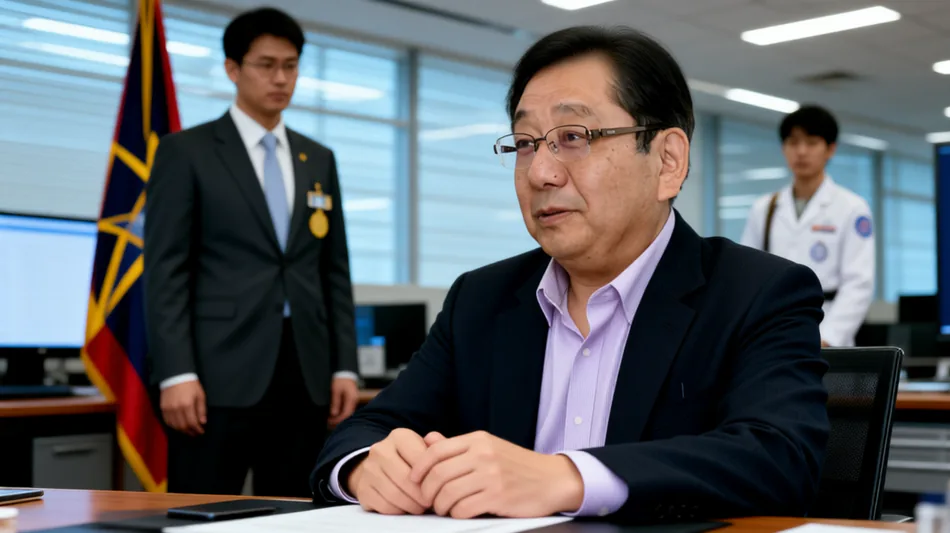
Japanese-Born Professor Attributes Rise in Korea-Japan Marriages to K-Drama Influence and Affectionate Behavior

Marriages between Korean men and Japanese women reached their highest level since records began in 2008 last year, according to new data. Hosaka Yuji, a special professor at Korea University, attributes this trend to Japanese women's appreciation for Korean men's open expressions of affection, the influence of Korean dramas, and the ability of Korean wives to retain their surnames.
Marriages between Korean men and Japanese women reached their highest level since records began in 2008 last year, according to new data. Hosaka Yuji, a special professor at Korea University, attributes this trend to Japanese women's appreciation for Korean men's open expressions of affection, the influence of Korean dramas, and the ability of Korean wives to retain their surnames.
Data from the Ministry of Justice shows that 1,494 marriages between Korean men and Japanese women were recorded last year. This figure represents an increase of 306, or 25.8 percent, from the previous year. The annual rise marks the second-largest increase on record, following a jump of 340 marriages in 2024.
This upward trend contrasts with a broader decline in international marriages between Korean men and women from Vietnam, China, and Thailand, which have traditionally accounted for a significant share of such unions in Korea.
Hosaka Yuji, a Japanese-born naturalized Korean citizen and special professor at Korea University's Graduate School of Public Administration, discussed these developments during an appearance on the YouTube channel Woongdal Bookstore on Sunday. He described the statistical rise as clear evidence that Japanese women have developed a strong preference for Korean men as marriage partners.
Hosaka identified two primary factors driving this preference: direct expressions of affection and attentiveness. He noted that while Japanese men rarely say "I love you" in daily life, Korean men tend to express their feelings more openly.
"Japanese women are deeply touched by gestures such as a man walking on the side of the traffic when accompanying a woman on the sidewalk, or cutting up an entire steak for her," Hosaka explained.
The professor also pointed to the cultural impact of Korean dramas in shaping favorable perceptions of Korean men among Japanese women. He stated that these programs often portray Korean men as individuals willing to risk their lives to protect women.
"The image of a man willing to devote everything he has to the woman he loves has become the ideal type for many Japanese women," Hosaka said.
Another factor cited by Hosaka is the difference in naming conventions after marriage. In Japan, wives traditionally take their husbands' surnames. In Korea, women retain their own family names. Hosaka noted that this policy appeals to some Japanese women who wish to preserve their identities.
"Quite a few Japanese women feel that Korea is actually a place where they can preserve their own identities," he said.
Regarding what Korean men find attractive in Japanese women, Hosaka highlighted their attentive listening skills and tendency not to immediately express disagreement. He explained that Japanese women are often taught from childhood not to reject what others say outright.
"Japanese women have a strong image of treating what men say as important and not immediately contradicting them. They don't start by saying, 'No, that's not right,'" Hosaka said.
The growing popularity of Korean men among Japanese women has also led to practical changes in the matchmaking industry. Hosaka noted that matchmaking agencies specializing in Korea-Japan marriages have opened in Tokyo, reflecting the demand for cross-border unions.
While international marriage statistics have shifted, the specific rise in Korea-Japan unions suggests a changing dynamic in how cultural products and social policies influence personal relationships across borders.
T.P.MacNamara--IP