Dolly Parton: Country music's dolled up but deserving queen
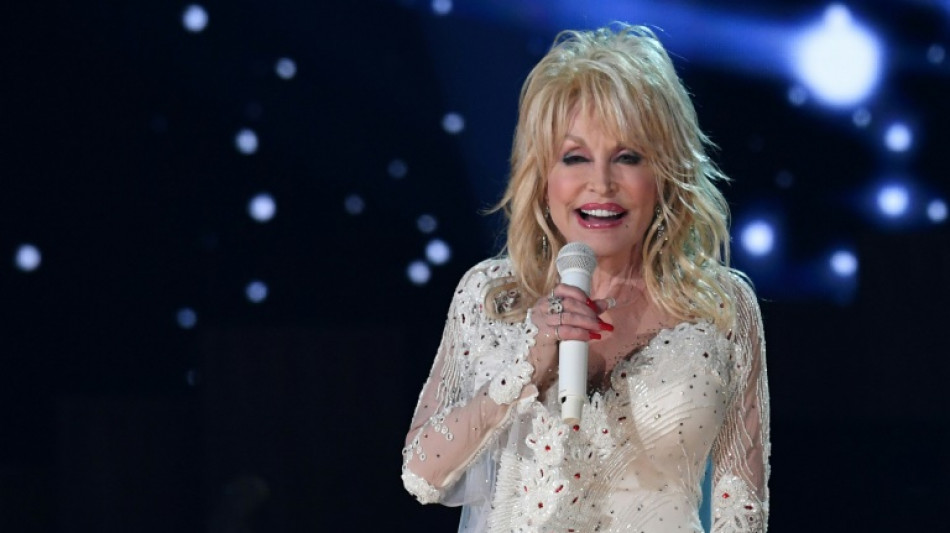
/ Photo: Robyn Beck - AFP/File

Back in 2008 at age 62, Dolly Parton released a single proclaiming she was "just a backwoods Barbie, too much makeup, too much hair."
In her six decades recording and defining country music, she was so much more.
The American singer-songwriter, actress, businesswoman and philanthropist didn't seem to mind being mistaken for a ditzy blonde all too eager to play up her looks, after growing up poor in rural Tennessee.
But Parton, who died Tuesday at age 80, was an immense and gifted talent who started writing serious music, what she called "sad-ass songs" about heartbreak and tragedy, at the tender age of 10.
By her own reckoning, she has penned 3,000 tunes in all, including enduring country standards like 1973's "Jolene" and the iconic ballad "I Will Always Love You," which became an international smash for Whitney Houston.
The "queen of country music" released 49 studio albums and more than 100 compilation and collaboration albums over a decades-long career that saw her sell more than 100 million records and top the charts more than any woman in the genre.
At the height of her fame, she reached number one on the pop charts too, with songs like "Islands in the Stream," and starred in Hollywood blockbusters "9 to 5," for which she sang the insuppressible title track, and "Steel Magnolias."
Dolly essentially wrote the book on how a woman can rule the airwaves in a male-dominated industry, ultimately becoming an American treasure whose songs were covered by the likes of Shania Twain, Sinead O'Connor and the White Stripes.
Her eye-popping hourglass figure, gravity-defying hairdos and wigs, and take-me-on-a-hayride appeal were unavoidable parts of her persona.
But she did not sweep sexism aside so much as defiantly play against it using her own rules, capitalizing on her homespun endearment and business savvy to rack up one of the largest fortunes of any American stage performer.
And she embraced the flash and glitter that came with stardom.
"I love makeup, I love clothes, and I got the personality that can pull it off," Parton told National Public Radio in 2001.
And Parton rarely went out of her way to knock down constant rumors about possible dalliances with other men despite her low-key marriage to Carl Dean, who remained well out of the spotlight after their 1966 wedding. He died last year.
"I didn't say I was dead, I said I was married," she grinned to late night TV host Jay Leno in 2002 when he asked whether she enjoyed her on-screen scenes with leading men like Sylvester Stallone.
Parton said she was "serious-minded about my work, but I knew how to enjoy men. Being a girl always served me well."
Her pulchritude was unavoidable, but her songcraft was proof that Dolly was more than eye candy.
"She may lead with the boobs but she has the talent to back it all up," Rolling Stone magazine editor David Wild once said.
- Dose of mountain purity -
Dolly Rebecca Parton was born on January 19, 1946 in Sevierville, Tennessee, the fourth of 12 children who grew up dirt poor in the family's small shack in the Great Smoky Mountains.
The platinum blonde was a quick musical study.
As a child, she sang her first songs to chickens outside the cabin. In 1959, she made her debut on the Grand Ole Opry's stage at age 13.
She mastered the guitar but it was her soprano voice, with its cracked vibrato that fluttered through so many of her songs and would occasionally shrink to a wounded whisper, that critics hailed as a dose of mountain purity.
The day after graduating from high school, Parton struck out for the country music capital Nashville.
By 1967 at age 21, she was among the most recognized figures in American music, having joined Porter Wagoner's syndicated country music television show that broadcast her voice and face into millions of US homes.
Occasionally her songs were mawkish or unimaginative. But in 1971, she released the spare and gorgeous "Coat of Many Colors," her archetypal, Bible-themed track about her mother overcoming poverty.
She eventually released 26 number one country hits, winning 10 Grammys and 13 Academy of Country Music awards.
But it was her ballad "I Will Always Love You," the delicate homage she wrote for Wagoner during their 1973 professional split, that would grow into a global phenomenon.
Houston recorded the song for the 1992 movie "The Bodyguard," and it became one of the best-selling singles of all time.
Elvis Presley had wanted to record it as well, but The King required half the publishing rights to anything he recorded. Parton, who owned all her publishing rights, turned him down.
- Relentless -
Parton opened her own theme park, Dollywood, in 1986 in Pigeon Forge, Tennessee. It has grown into one of the most successful branding efforts in US entertainment history, drawing millions of visitors per year.
Her work ethic was astonishing. Parton launched publishing and music production companies, a radio station and restaurants.
She co-wrote a best-selling novel with author James Patterson.
Her Instagram page, with 8.6 million followers, became an online phenomenon, and at age 75 she unveiled a new fragrance, "Dolly."
In 2020, the ally to the marginalized gave $1 million to Vanderbilt University, which helped develop Moderna's Covid-19 vaccine.
Her literacy program has donated some 100 million books to needy kids worldwide.
And her collaborations were relentless, including her work with actress Jennifer Aniston on the 2018 movie "Dumpling," for which Parton wrote the soundtrack.
It was all stunning vindication for someone who was once introduced on television as "one of the prettiest, singin'est, songwritin'est little blondes in country music."
Parton never had children, telling one interviewer she expected her songs "to support me when I'm old."
She earned a Kennedy Center Honor in 2006, one of the nation's highest accolades in the arts world.
But in 2021, she revealed she had declined the Presidential Medal of Freedom from Donald Trump, saying she did not wish to travel to Washington during the coronavirus pandemic.
"It'd be nice but I'm not sure that I even deserve it," she told NBC. "But it's a nice compliment for people to think that I might deserve it."
She was inducted to the Rock and Roll Hall of Fame in November 2022, despite initially turning it down.
A.Murphy--IP