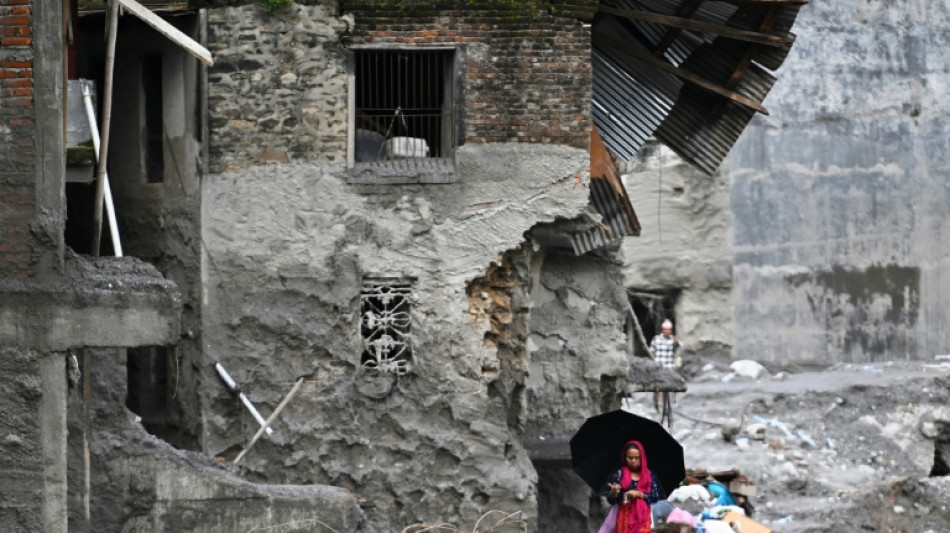
Women survivors face sanitation woes in Nepal relief camp / Photo: Arun SANKAR - AFP

Scores of women queued at a school sheltering Nepal flood victims, jostling to receive personal-care supplies, as concerns over sanitation and menstrual hygiene mount days after the catastrophic disaster.
Thousands of people displaced by Wednesday's flash floods are living in temporary relief camps, their homes either washed away by rivers or buried under silt and mud.
While authorities and aid groups have ensured that they have a roof over their heads and food to eat, many women at a school camp in Nuwakot district said they have had to contend with inadequate toilet facilities and unsanitary conditions.
"There are privacy as well as sanitation concerns," said Anju Bhujel, 40, who has been living at the camp with her two young children after the family home was swept away.
She said there are just three toilets for more than 400 people.
None of the toilet facilities have access to tap water.A volunteer said authorities were in the process of connecting them to a pipeline.
Menstrual hygiene is a particularly pressing concern.
"An NGO did supply sanitary pads but their disposal is a big issue," Bhujel said. "You can find used pads strewn around all the bathrooms."
Yogita Tamang broke down as she described her ordeal.
"They are giving us pads but we don't have undergarments," said Tamang, whose family of 20 has been living in a crammed classroom.
"What will we do with pads if we don't have underwear?"
Like many survivors, Tamang's family had only minutes to escape the torrent of water and debris that roared through their village, leaving them little chance to gather belongings.
- Additional risks -
At the shelter, an AFP reporter saw workers from the United Nations Population Fund distributing "dignity kits" containing sanitary pads, soap, underwear and other basic personal-care items to women.
But Tamang said the lack of water remained a problem.
"Not only is there no water in the bathroom, there is a shortage of drinking water," she said. "The NGOs do (provide) bottles but not everyone gets them uniformly."
Aid agencies warn that displacement can create additional risks for women and girls.
Overcrowding, shared facilities and loss of privacy can increase exposure to harassment and make it more difficult to seek assistance, UN Women said in a statement.
Jyoti Gaihre from the Golyan Foundation, the charity managing the school camp, said they were trying their best to manage the conditions.
"We have also distributed underwear but there are a lot of people and not everyone would have got them. We will distribute another lot in two days," she told AFP.
UN children's fund official Abiodun Banire said displaced families needed psycho-social support services and basic supplies "so that they can get a sense of normalcy while they are going through this difficult situation".
Many in the temporary shelter are also concerned they will soon be asked to leave when the school resumes classes.
"Where will we go then?" asked Maina Nepal, 50. "We will have to sleep on the street."
A.Hanbury--IP