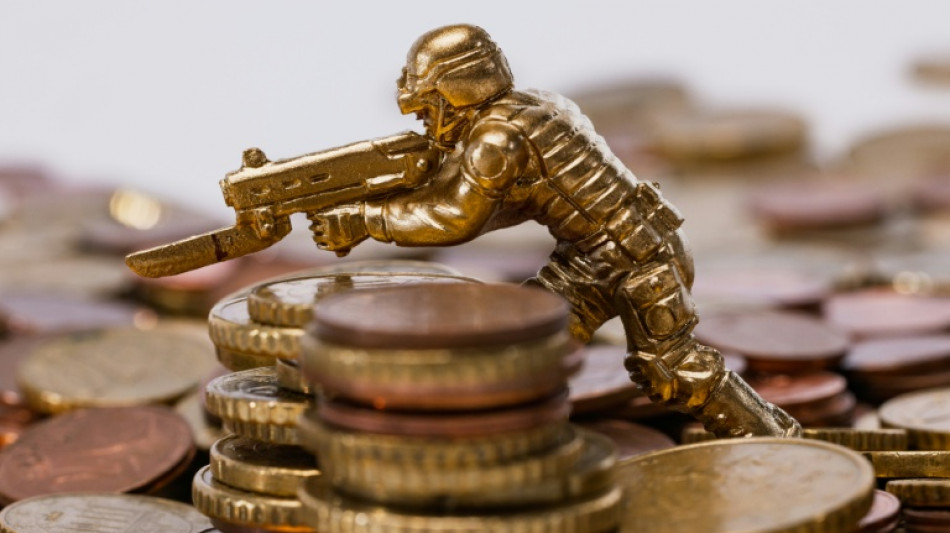
Proposed next EU budget cut back in search for deal / Photo: JOEL SAGET - AFP/File
Ireland, which holds the EU's rotating presidency, suggested Saturday slashing the bloc's next proposed budget by 140 billion euros ($155 billion), in a quest to bridge deep division and reach a deal by the end of the year.
European Union countries have been wrangling over the size of the next budget, with Germany spearheading calls for deep cuts to an earlier proposal of nearly two trillion euros by Brussels.
Leaders from the 27-nation bloc will meet in Brussels next week to discuss the plan as they seek to reach an agreement on the 2028-2034 budget by Christmas.
The EU fears that any delay would push talks into a fraught election year in 2027 with worries about what eurosceptic victories in France and elsewhere would mean for future dealmaking.
But the bloc is deeply divided. Germany leads a pack with Austria, Denmark, Finland, the Netherlands and Sweden, which want cuts of several hundred billion euros.
Meanwhile France, the second-biggest European economy and a net contributor to the budget, argues the continent needs sufficient means to match the rising challenges the 27-country bloc faces.
Ireland said its new draft -- which used 2025 prices -- foresaw an overall cut on the earlier proposal of 141 billion euros, or 8 percent overall.
The new budget would still far outstrip the EU's last one, which was worth around 1.2 trillion euros.
"I certainly hope that there will be a deal by Christmas," Ireland's Europe minister Thomas Byrne said.
"Nobody's going to get everything that they wanted in any proposal, but we think that there is something there for all of the member states."
But immediate reactions weren't promising.
"The overall volume must come down significantly," said Sweden's Europe minister Jessica Rosencrantz.
"The numbers that have been put on the table still present a wildly unaffordable increase and we are therefore nowhere near an agreement."
Meanwhile lawmakers at the European parliament said the cuts went too far and the new draft "cannot be the starting point for an agreement."
- Frugals vs Friends -
The latest draft recommends cutting back the original proposal most heavily in the area that covers international aid, with the cut being 17 percent.
Meanwhile, the most sensitive sectors such as agriculture, and funds for regional development were the least impacted with reductions of only three percent.
Proposed spending on bolstering Europe's economic competitiveness would be cut by some 13 percent and the envelope for EU administration reduced by 12 percent.
The draft will be at the centre of hours of fraught talks when EU leaders clash in Brussels next week.
Seventeen countries from southern, central and eastern Europe have formed a group known as the "Friends of Cohesion", pushing for greater funding to support agriculture and regional development.
Germany and the five other so-called "frugal" EU members in August lashed out at a high bloc budget at a time of "painful fiscal consolidation" -- with Chancellor Friedrich Merz politically weakened by the electoral rise of the far-right AfD party.
The main gripe for the frugal is the proposed budget represents an increase of around 60 percent on the last one at a time when member states have to tighten their belts.
But France meanwhile argues money is needed for farmers and to strengthen the European economy to help businesses compete with US and Chinese rivals.
- Collecting tax money -
Paris is struggling with its own budget woes -- and far-right leader Marine Le Pen has backed slashing the French contribution to the EU budget as one way to rein in the country's debt.
The answer, according to the European Commission? New sources of revenue, rather than larger contributions from member states.
Brussels has put forward plans for a tax on large companies, a levy on electronic waste, and higher tobacco taxes. The European Parliament wants to go further with taxes on digital giants and online gambling.
Ireland recommended hiking some of the levies but stuck more or less to the commission's original lines, saying the measures it was putting forward would raise 55 billion euros a year.
S.Daugherty--IP