Forty new migratory species win international protection: UN body / Photo: Luke Seitz - Cornell Lab of Ornithology/AFP/File

The UN Convention on the Conservation of Migratory Species of Wild Animals (CMS) on Sunday approved the listing of 40 new species for international protection, including the snowy owl featured in the Harry Potter saga.
The decision came at the conclusion of the COP15 summit on migratory species in Campo Verde, Brazil, which brought together representatives from 132 countries and the European Union.
It is one of the world's most important global meetings for wildlife conservation.
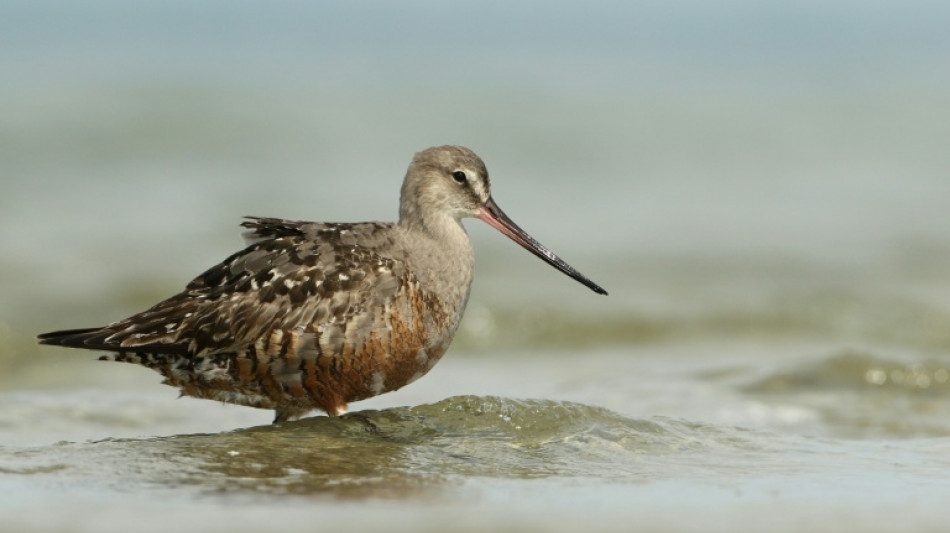
Also on the new list for protection along with the snowy owl (Bubo scandiacus) are the Hudsonian godwit (Limosa haemastica) -- a long-beaked shorebird threatened with extinction -- and the great hammerhead shark (Sphyrna mokarran).
The new list featured land mammals like the striped hyena (Hyaena hyaena) and other aquatic wildlife such as the giant otter (Pteronura brasiliensis).
The countries that are party to the CMS are legally obliged to protect species listed as at risk of extinction, conserve and restore their habitats, prevent obstacles to migration and cooperate with other range states.
Campo Verde is in Brazil's biodiversity-rich Pantanal wetlands, in the southern Amazon.
According to a report released ahead of the summit, nearly half (49 percent) of all species catalogued by the CMS are showing signs of declining numbers, and nearly one in four are threatened with extinction on a worldwide scale.
Another major UN assessment, published on Tuesday as the summit opened, warned that migratory freshwater fish populations crucial to river health and sustaining the livelihoods of millions of people are in freefall and risk collapse.
Habitat destruction, overfishing and water pollution from the Amazon to the Danube threaten the very survival of hundreds of species whose epic voyages along the world's great rivers go largely unnoticed.
Last November, Brazil hosted the COP30 climate summit in the Amazonian city of Belem.
P.Walsh--IP