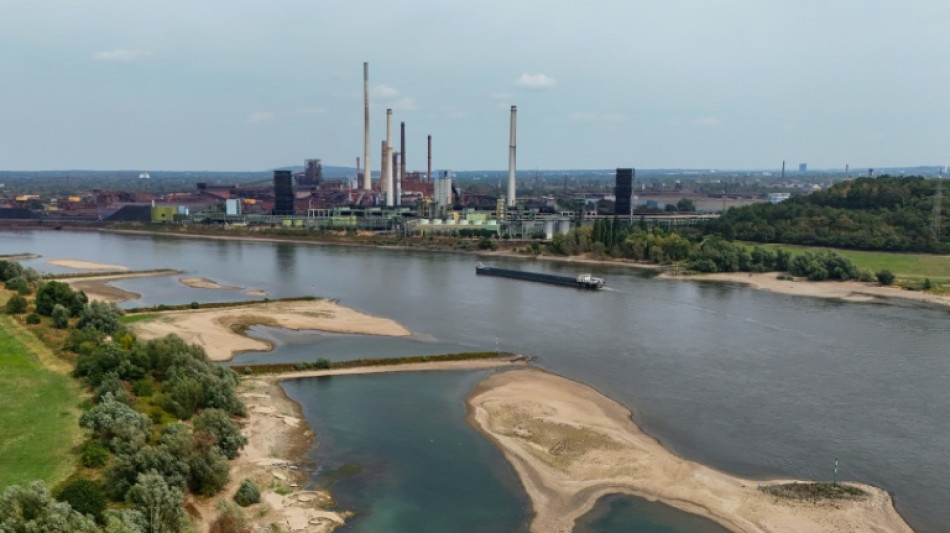
German steel giant Thyssenkrupp weighs options as Rhine drops / Photo: Ina FASSBENDER - AFP

German steel giant Thyssenkrupp said Thursday that it was monitoring water levels in the Rhine and ready to respond if they drop further, after boat deliveries of raw material deliveries were disrupted.
The Rhine, a key artery for many industries in Germany, has fallen to record lows amid soaring summer temperatures and little rainfall, including around a major Thyssenkrupp plant in the western city of Duisburg.
The group had already said it was partially suspending its own barge deliveries of materials such as coal and iron ore to the site, and instead chartering private vessels with lower draughts that could still operate in the shallow waters.
While saying there was no major impact yet on its blast furnaces, finance chief Axel Hamann said the company was keeping a close eye on the situation.
"We have set up a dedicated task force in the steel division to monitor it," he said during an earnings call.
"We have a few options to adjust our production and the operating mode of our facilities to some extent, so that we can work longer with the inventories we have," he said.
"We are also examining how much can be transported by road, via alternative routes."
The German government has temporarily lifted a ban on truck transports on Sundays and public holidays to help industries that rely on the Rhine for deliveries, which also include sectors such as chemicals and agriculture.
Hamann emphasised that customer supply was currently not at risk.
But he also said that "if the situation really deteriorates and shipping were to come to a standstill, we could not rule out an impact on our results".
Water levels on the Rhine have dropped even further this week, and Germany's inland shipping association has warned that the waterway could become unnavigable in places.
Thyssenkrupp announced Thursday a rise in quarterly profits and slightly increased its annual outlook, forecasting full-year operating profit of 600 million to 900 million euros ($690 million to $1 billion), from a previous forecast of 500-900 million euros.
Shares in the company, whose business has been hammered in recent years by competition from Asian steelmakers, were up around one percent in Frankfurt.
C.Keough--IP