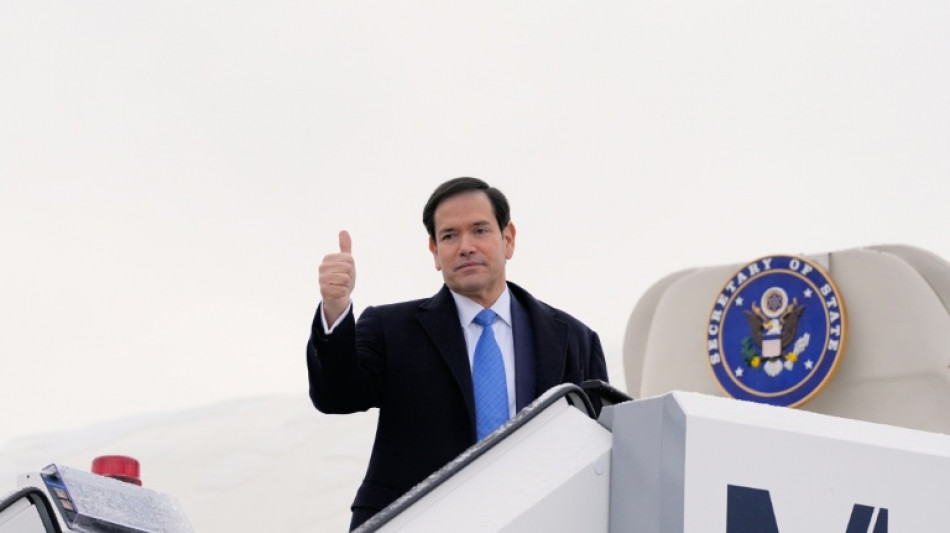
Rubio says US does not want 'vassal' Europe on visit to Trump's allies / Photo: Alex Brandon - POOL/AFP

US Secretary of State Marco Rubio said Sunday that the United States does not want a "vassal" Europe, the day after a speech where he called on Europeans to embrace President Donald Trump's vision for "renewal" of the global order.
"We're not asking Europe to be a vassal of the United States," Rubio said during a brief visit to Bratislava, following his appearance at the Munich Security Conference.
"We want to be your partner. We want to work with Europe. We want to work with our allies."
Rubio told European leaders in Munich that they should rally behind Trump to defend "Western civilisation," which Rubio said is in danger of "erasure" by mass migration and cultural and industrial decline.
- Friends of MAGA -
Rubio moved on from Munich to some of Trump's staunchest right-wing allies in Europe. He met with Slovakian Prime Minister Robert Fico and then flew to Budapest where he is to meet nationalist Prime Minister Viktor Orban on Monday.
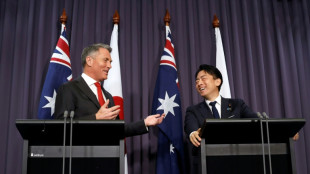
At a press conference with Fico, Rubio asserted that Trump wanted to strengthen ties with Central Europe.
He also emphasised that it was in the US interest to have "a strong Europe" more broadly at a time when transatlantic relations are turbulent. He rejected the notion that the United States would feel threatened by a more independent Europe.
Fico has embraced a similar strand of right-wing nationalism to Trump and cultivated close ties with Trump's MAGA movement.
During a recent visit to Trump's Mar-a-Lago estate in Florida, Fico reportedly expressed concern about the US president's mental state, according to Politico, which cited anonymous European diplomats. Washington and Bratislava vehemently denied the report.
The Slovak leader said after the Mar-a-Lago meeting that he and Trump had had "extremely important" discussions on nuclear energy.
Slovakia shares a 100-kilometer (60 mile) border with Ukraine and Fico on Sunday praised Trump's "approach" to the war there, which he described as "rational and pragmatic". Fico said however that the conflict would not be resolved in the near future.
Rubio said he appreciated the remarks and the stakes for Slovakia, saying that the US role is to "facilitate an end to a very deadly, very bloody, very, very costly war, with horrible suffering".
The US chief diplomat then departed for Budapest, where Orban is facing his toughest electoral challenge since returning to power in 2010.
Trump has openly supported the Hungarian nationalist leader, whom he describes as a "strong and powerful man," ahead of parliamentary elections on April 12.
Orban's Fidesz party trails opposition leader Peter Magyar's TISZA party in opinion polls.
- A boost for Orban? -
In a speech on Saturday, Orban pledged to continue his fight against "bought pseudo-civil organisations, journalists, judges and politicians".
His rhetoric often echoes Trump, and he has cast himself as a European friend of Trump's MAGA movement.
Many American conservatives admire Orban's hardline anti-immigration stance, resistance to LGBTQ rights and war against "gender ideology".
Orban has announced plans to travel to Washington next week to attend the inaugural meeting of Trump's "Board of Peace".
- Energy diplomacy -
During a visit to the White House last year, Orban secured Hungary an exemption from US sanctions on importing Russian oil and gas.
Former Democratic president Joe Biden had a more hostile relationship with Orban, whom he accused of "looking for a dictatorship" in Hungary, including by muzzling independent media.
Slovakia and Hungary have sought to keep warm ties to the Kremlin since Russia's 2022 full-scale invasion of Ukraine.
Both depend heavily on Russian fossil fuels, and both have found themselves locked in a standoff with the European Union over the decision to end imports of Russian gas.
Washington is seeking to strengthen energy ties with its two right-wing allies, and energy was discussed by Rubio in Bratislava. According to US officials, it is expected to come up again in Budapest.
M.Ansbro--IP