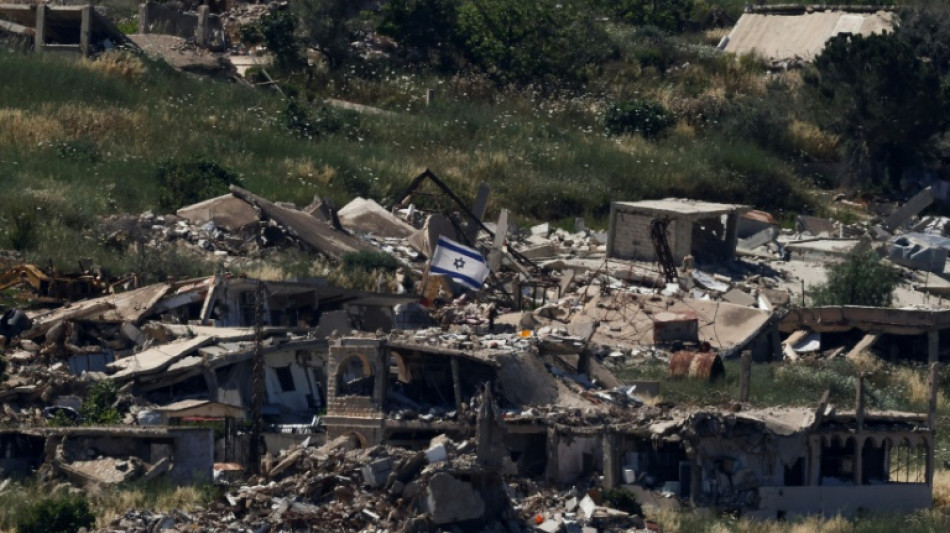
Israel strikes south Lebanon after warning to several areas / Photo: Jalaa MAREY - AFP

Israel's air force struck south Lebanon on Friday following warnings for several areas of imminent attacks against Hezbollah, after the Iran-backed militants rejected a truce brokered by the United States.
Lebanon was drawn into the wider Middle East war when Hezbollah attacked Israel on March 2 to avenge the February 28 killing of Iran's supreme leader.
Lebanese and Israeli envoys meeting in Washington this week agreed to a conditional truce that Hezbollah flatly rejected, with the group instead demanding a comprehensive ceasefire and full Israeli withdrawal from south Lebanon.
Lebanese parliament speaker and Hezbollah ally Nabih Berri said Friday that the group would withdraw from the area south of Lebanon's Litani River if these conditions were met.
Israel has staged its deepest incursion in two decades into Lebanon since the start of the war with Iran, which it launched in conjunction with its ally, the US.
On Friday, the Israeli military's Arabic-language spokesman Avichay Adraee warned residents of six towns and villages including south Lebanon's Sarafand, a town on the coastal road between Tyre and Sidon, to immediately evacuate.
He earlier warned three villages north of the Litani River in southern Lebanon to leave their homes.
Lebanon's state-run National News Agency reported mass displacement from two of the three villages named in the first warning, and it subsequently reported strikes on some of the threatened areas.
Overnight, Israeli strikes killed seven people in the southern Lebanese city of Tyre, a source from Lebanon's civil defence told AFP.
- 'Freedom to kill' -
In rejecting the truce Hezbollah chief Naim Qassem on Thursday called on the Lebanese goverment to halt "the farce and humiliation called direct talks" with Israel.
"The ceasefire must be comprehensive... without the Israeli enemy having the freedom to kill," Qassem said.
Israeli Defence Minister Israel Katz said that the army will "at this stage, continue its fire and ground operations... without the return of the population, while continuing to dismantle terrorist infrastructure".
He said Israeli forces had the "freedom" to strike Lebanese capital Beirut if Hezbollah attacked Israeli communities.
One Israeli strike near the Jabal Amel hospital in the historic city of Tyre killed four people overnight, wounded seven and lightly damaged the facility, while another in a residential area killed three and wounded five, including two children.
An AFP correspondent saw a heavily damaged bank near the hopsital, one of only three in the city.
"I was in my mother's hospital room when a powerful strike hit near the hospital," Marwan Ghorayeb told AFP, adding that his mother had also survived a Monday strike near the facility that killed four people and wounded 127, including 39 hospital personnel.
"My house in my hometown was destroyed, and my house in Tyre was destroyed. How long will this go on?"
- 'Not a life' -
After Israeli orders for residents to leave most of Tyre, several people sought shelter in the small old city, so far spared from evacuation warnings and strikes and where the Christian quarter is located.
With shelters full, displaced residents were sleeping in cars or tents, but many have left following an Israeli army claim on Tuesday that Hezbollah members were operating in the area, threatening to order evacuations should operatives remain.
Hezbollah is Lebanon's only militant group that refused to hand over its arsenal after the 1975-1990 civil war, arguing that it was fighting Israel's occupation of south Lebanon.
After Israeli troops withdrew in 2000, calls on Hezbollah to disarm multiplied, with the leadership under President Joseph Aoun taking the firmest stance yet.
The Lebanese government has declared Hezbollah's military activities illegal, and the army was working to disarm the group in areas south of the Litani River near Israel.
The war launched by the US and Israel on Iran saw Hezbollah return to the battlefield, launching attacks into Israel while fighting Israeli troops inside Lebanon.
Lebanon's health ministry said Israeli attacks have killed at least 3,526 people since March 2.
As the trading of fire continued, Israelis in northern villages expressed little hope for the latest truce.
"We can't keep doing this," the 60-year-old told AFP on Thursday from her home in Shlomi, a small town in Israel's far north.
"This is not a life."
O.Byrne--IP