US trade gap in May widens to biggest in over a year / Photo: Frederic J. BROWN - AFP/File

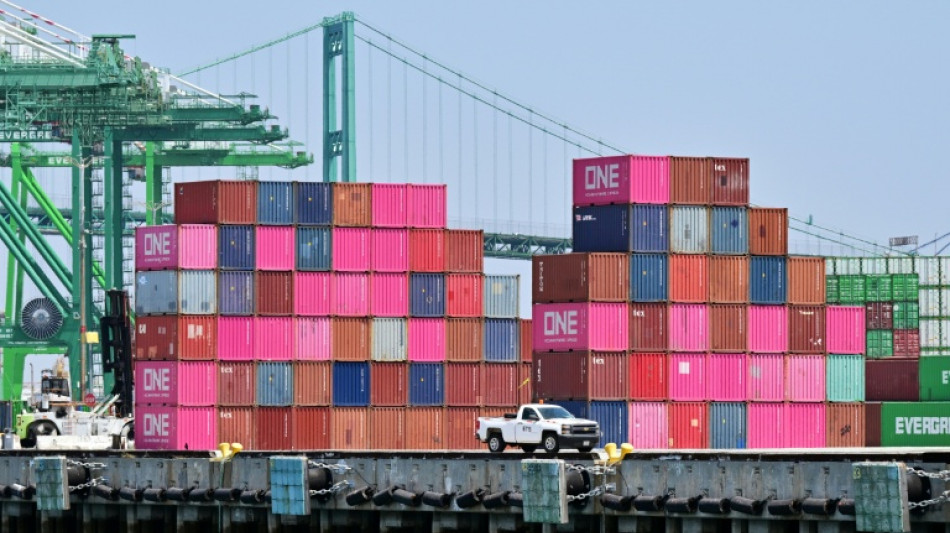
The US trade deficit widened sharply in May to its largest in over a year as imports rose, government data showed Tuesday, with analysts noting that businesses could be gearing up for further tariffs.
The shift came as the world's biggest economy grappled with fallout from war in the Middle East, while imports of tech goods linked to the country's data center buildout remained strong.
The overall trade gap surged from the month prior by 42.2 percent to $77.6 billion, according to data from the Commerce Department. This was slightly less than a consensus forecast by Briefing.com.
In May, imports climbed by 3.3 percent to $395.3 billion, while exports dipped by 3.2 percent to $317.7 billion.
While imports of capital goods like computer accessories and semiconductors showed just a modest increase, "they are up 42 percent year-over year, thanks to ongoing demand for AI hardware," said economist Grace Zwemmer of Oxford Economics.
She added that the latest imports uptick was broad-based and led by consumer goods, with "about half the strength attributed to pharmaceutical preparations."
"This could be a sign that businesses are beginning to frontload pharmaceutical imports ahead of the 100 percent tariffs that are set to go into effect on July 31, although there are many exemptions embedded in the policy," Zwemmer noted.
US trade data has been fluctuating widely over the past year as President Donald Trump imposed sweeping tariffs on various trading partners, sending businesses scrambling to avoid them.
"Imports convey solid US domestic demand," said Nationwide financial market economist Oren Klachkin in a note.
But he added that companies' attempts to get ahead of planned tariff hikes "likely lent a hand."
Meanwhile, US exports of crude oil and petroleum products advanced after US-Israeli strikes on Iran from late February, which triggered Tehran's retaliation in virtually blocking the Strait of Hormuz.
The strait is a key waterway for energy transit, sending prices soaring at the time.
While crude exports were still up in May, the partial reopening of the strait after the United States and Iran signed a memorandum of understanding helped push petroleum exports towards pre-war levels, Zwemmer said.
For now, the temporary deal saw a pause in hostilities while officials seek a longer term solution, and energy costs have cooled.
J.Malbrough--IP