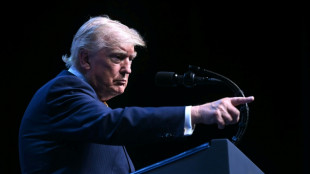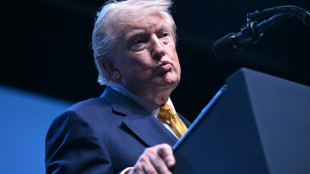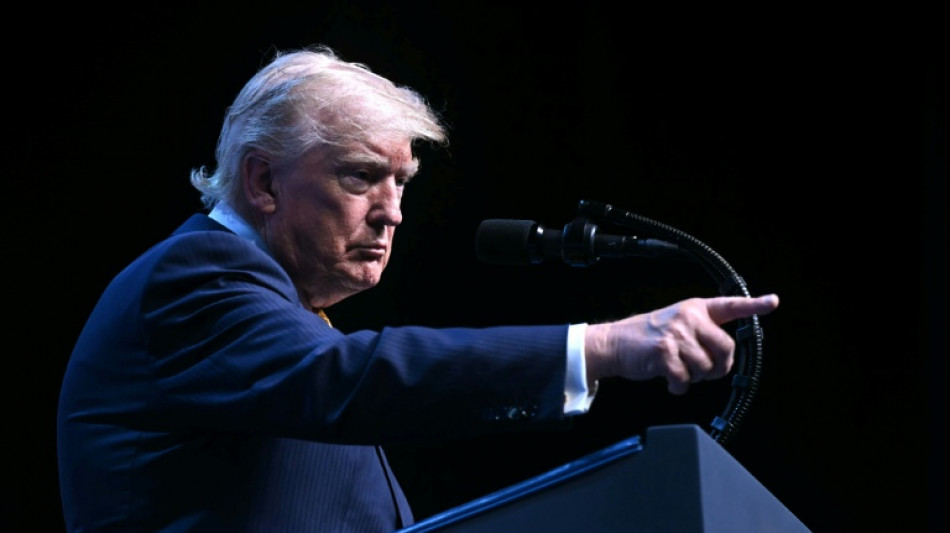
US launches new strikes on Iran after Trump vows to hit 'hard' / Photo: SAUL LOEB - AFP

The United States launched new strikes on Iran on Wednesday after President Donald Trump vowed to hit "hard" following Iranian attacks on ships in the Strait of Hormuz.
Trump, while ordering retaliation against Tehran, said he expected the latest military flare-up to end quickly and left the door open to more talks.
US Central Command said the strikes were carried out to degrade the ability of Iranian forces "to threaten freedom of navigation" in the strait, through which a fifth of the world's oil and liquefied natural gas normally flows.
"The United States is holding Iran accountable for recent unjustified aggression against commercial shipping," CENTCOM said on X.
Iran's Mehr news agency said explosions had been heard in the port cities of Bandar Abbas, Konarak and Chabahar.
Before ordering the latest strikes, Trump said the ceasefire with Iran was over, prompting mediators Pakistan and Qatar and the United Nations to call for de-escalation.
The Strait of Hormuz remains a flashpoint in the Middle East conflict, which began in late February with US-Israeli strikes that killed Ali Khamenei, Iran's supreme leader who is to be buried in his hometown of Mashhad on Thursday.
Tehran insists on controlling the strait, saying it will charge fees for passage and threatening to hit vessels that deviate from its authorised route.
Its military struck at least three ships in recent days, prompting extensive US strikes against Iranian targets on Tuesday, followed by retaliatory attacks from Iran on Gulf countries.
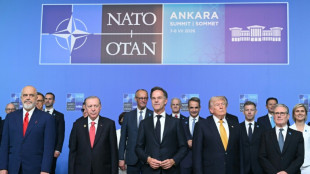
"We're gonna hit 'em hard tonight," Trump said at a NATO summit in Ankara. "They violate the agreement every day."
He added later, however, that "anything that happens is going to be over very quickly."
Oil prices jumped eight percent after Trump's earlier comments that the ceasefire was "over."
- 'Maximum restraint' -
UN chief Antonio Guterres called meanwhile "on all parties to exercise maximum restraint" -- as did Pakistan, a key mediator in the US-Iran talks.
Iran said Foreign Minister Abbas Araghchi and Qatar's prime minister had spoken over the phone on Wednesday and "underscored the importance of using diplomatic means to resolve regional issues."
Both the United States and Iran said they had hit dozens of targets in the initial wave of attacks.
Iranian state media reported a series of blasts in the coastal city of Bushehr, which hosts the country's only civilian nuclear power plant and lies near Kharg island, the main oil terminal through which 90 percent of Iran's crude exports transit.
Iranian state television said US strikes killed eight military personnel.
CENTCOM said its forces had struck more than 80 targets on Tuesday, including Iranian air-defence systems, coastal radar sites and 60 IRGC small boats.
Tehran's reply came quickly, with the Guards saying they hit dozens of US military facilities in Kuwait and Bahrain.
Kuwait said it had intercepted two ballistic missiles and 13 drones, while the Iranian army said it had also attacked US forces at Sheikh Isa air base in Bahrain.
The latest attacks launched by Iran did not result in any American casualties or cause major damage to facilities, a US military official said on Wednesday.
"All missiles and drones fired by Iran were intercepted or failed to cause major damage," the official told AFP.
Nawal Saad, a Bahraini civil servant, lamented that "the spectre of war is looming once more," saying "I do not want to go through that experience of fear and anxiety again."
- 'Seafarers stranded -
Oman, which sits on the other side of Hormuz from Iran, condemned the targeting of Bahrain and Kuwait as well as the strikes on ships, but without blaming Iran.
The former mediator has not blamed Iran for attacks throughout the war, in an effort to maintain its neutrality, which is being tested by talks with Tehran over the administration of Hormuz.
Washington wants free passage for ships while Iran is insisting on fees and has refused to allow vessels to pass through Omani waters.
Maritime traffic had tentatively resumed after Washington and Tehran signed the deal to end hostilities last month.
But almost 6,000 seafarers remain stranded in the area, International Maritime Organisation chief Arsenio Dominguez said Wednesday.
burs/cl/ksb
R.T.Anglim--IP