Kosovo war crimes trial opens against fugitive Serbs / Photo: Armend NIMANI - AFP

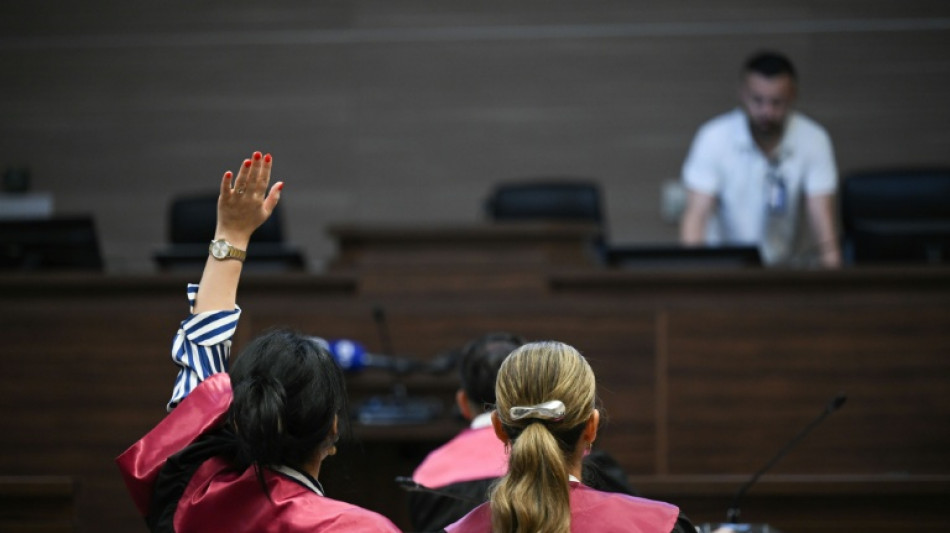
A trial over one of the worst war crimes in the 1990s Kosovo conflict opened on Friday in Pristina, with 21 Serb officials to be tried in absentia over killings that had prompted NATO intervention.
The killings in the southern Kosovo village of Racak, or Recak, in Albanian, in January 1999 triggered international outrage after Serbian forces were accused of murdering 42 civilians.
The incident was eventually used to partly justify a US-led bombing campaign that ended the conflict between Serbia and independence-seeking ethnic Albanian guerrillas.
Serbian officials, including the country's current President Aleksandar Vucic, have repeatedly denied the massacre occurred -- instead alleging those killed were Kosovo Liberation Army fighters.
Presiding judge Violeta Namani Hajra opened the trial, noting the absence of the defendants and said it would proceed even without a plea from the accused.
Prosecutor Ilir Morina read out a summary indictment against the men, and said an international warrant for their arrest had also been issued.
They are charged with murder, torture, inhumane treatment, destruction of property, and the deportation of civilians to Albania.
The accused include former police head Obrad Stevanovic, intelligence chief Radomir Markovic and the police general in charge of special operations, Goran Radosavljevic.
The court had earlier demanded they "appear and surrender" to authorities in Kosovo, but none have.
- 'Necessary solution' -
Lawyers for the accused have been appointed by the bar association, with Stevanovic's representative saying he would do his best for his client despite his absence.
"There was no other way to try the accused because they are outside the country but try them in absentia," Lawyer Agron Curri said.
"All charged have the right to a defence."
According to an indictment seen by AFP, the men are accused of taking part or planning the attack, which included shelling before the Serbian forces entered the village and searched homes.
It also alleges that the victims were "unarmed" and "executed at close range".
"The killings did not take place in combat, but were deliberate, planned and systematic executions, clearly indicating the criminal nature of the operation," the lengthy indictment reads.
- Turning point -
Serbia has never admitted to the massacre in Racak, insisting that those killed were armed guerrilla fighters.
The killings became a turning point in the war, leading to the NATO strikes targeting Serbia, which strongman Slobodan Milosevic ruled at the time.
Earlier this year, authorities also arrested five Kosovo Serbs over their involvement in the killings -- with a separate trial pending.
At the time of the arrests, Serbia's office for Kosovo condemned them as part of an "anti-Serb policy".
After Serbia's troops left the territory, an international peacekeeping force was stationed in the country -- which declared independence in 2008.
Belgrade has never recognised its former territory's independence.
More than 13,000 people were killed during the Kosovo conflict, mostly ethnic Albanians.
Ch.Anglin--IP