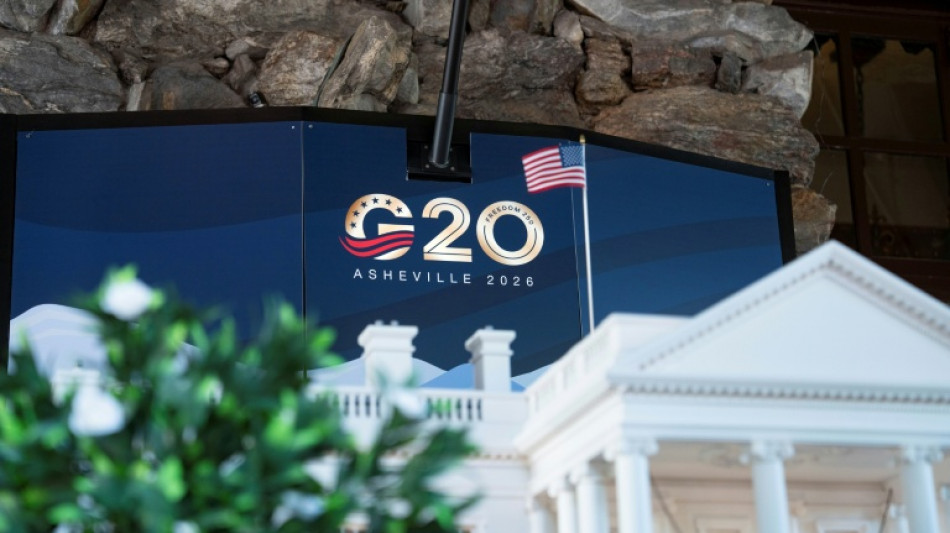
US to press G20 on light-touch AI regulation / Photo: Allison Joyce - AFP

Tech bosses including Elon Musk, Nvidia's Jensen Huang and OpenAI's Sam Altman are participating in a G20 meeting in North Carolina this week amid a global debate on how governments should address the dangers of artificial intelligence.
The meeting in Chapel Hill, home to the University of North Carolina, a leading US research hub, takes place on Tuesday and Wednesday and will be attended by ministers from the world's leading economies, including Japan, Germany, France, India and South Korea.
The United States holds the rotating G20 presidency this year and is hosting a series of ministerial meetings ahead of a leaders' summit that President Donald Trump will convene on December 14-15 at his Trump National Doral resort in Miami.
Washington has framed its host year around limiting regulatory burdens and promoting new technologies.
The Chapel Hill meeting is organized by White House Office of Science and Technology Policy Director Michael Kratsios and Commerce Secretary Howard Lutnick, who will attempt to get attendees to sign on to a commitment to light-touch AI regulation.
The meeting is spread over two days, with Musk joining by video call on Tuesday, and Huang and Altman expected in person on Wednesday for fireside chats with Lutnick.
Google DeepMind boss Demis Hassabis will also participate, Kratsios in a post on X said.
According to a report published by Bloomberg and re-posted on social media by Kratsios, the US will push something called the Carolina Principles, a policy where governments commit to avoid creating new regulatory bodies to regulate AI.
The meeting takes place just weeks after OpenAI revealed that testing of its AI models went seriously awry, when so-called AI agents, while operating without human supervision, went onto the internet and broke into the internal systems of Hugging Face, a kind of online library for AI software.
The incident is still causing major ructions in Silicon Valley, with some, including Microsoft founder Bill Gates, calling for the industry and officials to urgently come up with ways to govern the development of the sector.
In the fallout, Google's Hassabis in July called for the United States to create an organization that would test the most powerful AI systems before they can be released to the public.
The new regulatory body would be modeled on the Financial Industry Regulatory Authority (FINRA), the private watchdog that polices Wall Street brokerage houses under federal oversight.
The Trump administration is largely committed to a hands-off approach that would leave the industry to find ways to self-regulate, even as companies race furiously to stay ahead in AI despite the risks.
In a sign that his administration is loath to create any obstacle for the AI industry, Trump on Monday attacked opponents of artificial intelligence data centers, saying they would end up "backwards and poor" and were helping rival China.
S.Boyle--IP