'Trumpapalooza' tests Republican bet on unpopular US president / Photo: SAUL LOEB - AFP/File

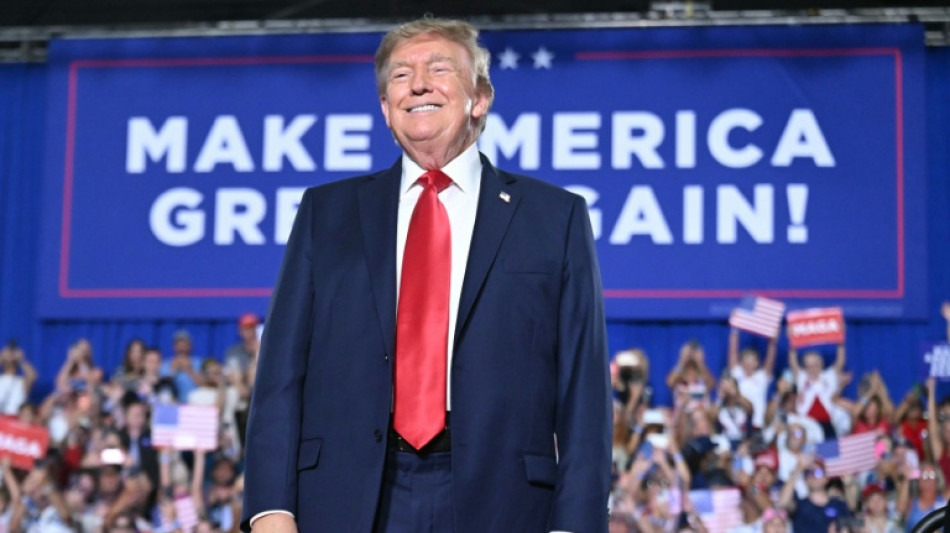
US Republicans will gather in Dallas, Texas, next week for a two-day convention aimed at convincing voters that Donald Trump is effectively on the ballot in November -- even as the deeply unpopular president threatens to become a liability for his own party.
The September 9-10 gathering -- dubbed "Trumpapalooza" by organizers -- is an unusual midterm experiment, designed to rally voters around Trump's record as the party faces increasingly grim forecasts for elections that could cost it control of Congress.
Decision Desk HQ projects Democrats to win the House of Representatives by 229 seats to 206, while putting the Senate at a knife-edge 50-50.
Republican leaders have nevertheless decided that the answer is more Trump, not less.
"The president's going to look right into the camera and say, 'I am on the ballot,'" House Speaker Mike Johnson told supporters in Texas ahead of the gathering.
"Because, even though his name isn't, his administration, his legacy, the America First agenda is."
Trump will appear both days at Dallas's American Airlines Center, headlining on Wednesday and delivering closing remarks at Thursday's finale after Vice President JD Vance's keynote address.
Trump promised a musical celebration of the party's "tremendous victories" and "incredible candidates" in a social media post billing the event as "the greatest rally of them all."
- Staying home -
Organizers hope to showcase the administration's tax cuts, immigration policies and other achievements while portraying Democrats as increasingly extreme.
But the strategy carries risks.
Trump's approval rating has fallen into the low-to-mid 30s amid stubborn inflation, high fuel prices, an unpopular war with Iran and a costly trade dispute with Canada.
Perhaps more tellingly, many of the Republican candidates whose races will determine control of Congress appear reluctant to join the celebration.
A Politico survey of more than 70 lawmakers and candidates found most either did not plan to attend or had yet to commit, with dozens more declining to disclose their plans.
Some vulnerable Republicans have cited campaign commitments, debates or family obligations, while others have complained privately about being asked to contribute at least $25,000 to attend.
Johnson acknowledged that some members need to remain home but insists most Republicans will make at least an appearance, describing the event as an opportunity to put the party's record before a national television audience.
"We have a real opportunity to defy history and win the midterms," Johnson said in a video promoting the gathering.
- Football competition -
There are also doubts over how much of that television audience will actually be watching.
Both convention nights clash with the opening games of the National Football League (NFL) season, potentially forcing Trump's prime-time show into competition with one of America's most popular sporting events.
Republican organizers reject suggestions the event is mistimed, arguing it will energize activists, raise money and give candidates valuable national exposure. They expect tens of thousands of attendees.
The convention is also being used as a major fundraising opportunity: donors have reportedly been offered a photograph with Trump for $88,600, while access to a roundtable with the president costs $250,000.
For Republicans, however, the bigger gamble is political.
Their November strategy depends on persuading millions of voters who turned out for Trump in 2024 to return when he is not actually on the ballot -- while avoiding alienating independents who have increasingly soured on his presidency.
Veteran Republican political consultant Matt Klink, who has worked on hundreds of federal, state and local political campaigns over three decades, said Trump could be both a hindrance and a help in November, depending on the state.
"Some candidates will continue to embrace Trump, while other battleground campaigns are weighing how closely to identify with him amid inflation concerns, the Iran war and his weak approval ratings," he told AFP.
"Bottom line, Republicans can't break with Trump because Democrats and the media won't let them. But they can work to focus on local issues and priorities, and paint opponent Democrats as radical extremists."
Ch.Driskell--IP