Arab Israelis proud of high election turnout, uncertain for future / Photo: AHMAD GHARABLI - AFP

A librarian in an Arab town in northern Israel, Maysa Nasser never thought to vote in national elections. But on Tuesday she cast a ballot for the first time, stung by the racism she has felt from the hard-right government.
Many in Israel's Arab minority felt like her, heading in unprecedented numbers to the polls out of fury at Prime Minister Benjamin Netanyahu. Winning a record number of seats, Arab lawmakers now have the power to unseat him -- but only if the opposition overcomes resistance to allying with them.
Nasser, 50, sees brighter days ahead after the landmark turnout.
"Everything about this election campaign felt different this time. There was unity. In the final hours before the polls closed, there was a kind of happiness that we had previously lost," the librarian from Majd al-Krum, north of Haifa, told AFP.
"I am 50 years old, but I had always boycotted elections and defended the boycott because I had been deeply disappointed by members of the Knesset," she said of Israel's parliament.
Israeli Arabs are forecast to secure around 19 seats in the 120-member Knesset, a major gain driven by communities such as Majd al-Krum, where 85 percent of eligible voters turned out.
The community which once often shunned elections is now turning out at rates even beyond Jewish Israelis, in an atmosphere that has become more fraught since the October 7, 2023 attacks on Israel by Hamas.
Around 20 percent of Israel's population is Arab -- descendants of Palestinians who stayed after the creation of the state of Israel in 1948 -- with many of them living in towns and villages of the hilly Galilee region in the north.
Netanyahu's far-right partners including National Security Minister Itamar Ben Gvir have called for moving Jewish settlers into the Galilee, following the model of the occupied West Bank where settlers have enjoyed virtual impunity in attacking Palestinians.
-'Don't know what comes next'-
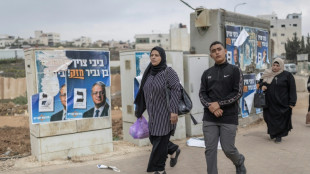
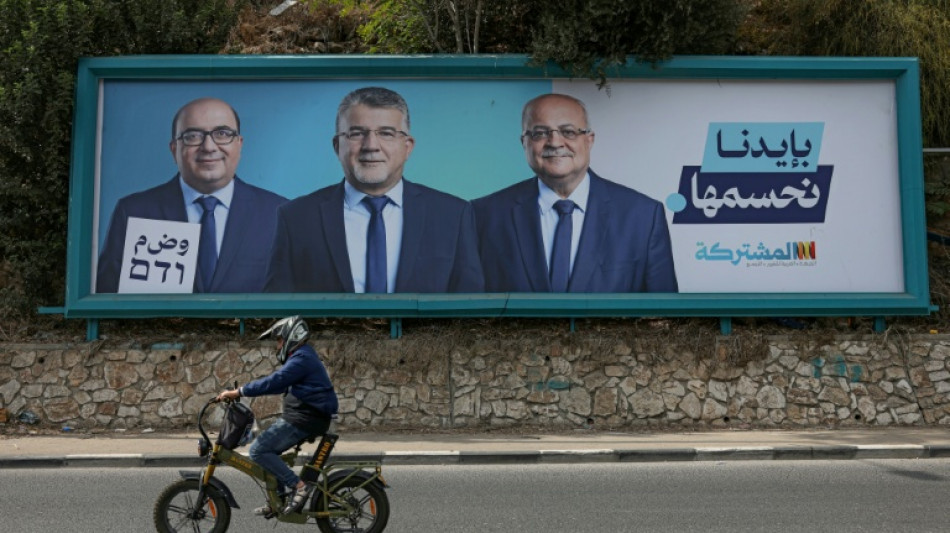
On the highways leading to Galilee towns such as Nazareth, the hometown of Jesus Christ, Hebrew-language billboards showcase Netanyahu and Ben Gvir before gradually giving way to posters in Arabic encouraging voters to choose Arab lists.
"I'm proud of myself, proud of everyone who voted. Not just the people from my town, but the entire Arab community that voted," Amal Farhan said, recalling the crowds she saw when she cast her ballot.
"My rights in this country should be equal to those of a Jewish student studying alongside me," said the 18-year-old who is preparing for university entrance exams.
Young and old alike in Majd al-Krum, a town of 15,000 nestled between a highway and a mountain, celebrated into the late hours at the election result.
But one day later, as political horsetrading and seat counting began, hope gave way to uncertainty.
"We shouldn't let the celebrations carry on and rejoice too much, because we don't know what comes next," said Mohammed Zarkawi, a 23-year-old student and employee in his father's pizzeria.
"The turnout was high, but the celebrations will only really mean something when there is a change of government, a government that comes and makes peace," he said.
His father Ahmad said that though he voted for an Arab party, many in town including his other son chose The Democrats, a left-wing party led by Jewish Israeli Yair Golan.
"Golan really wants peace between Jews and Arabs," he said.
Golan has urged opposition chief Gadi Eisenkot to form a government with Arab lawmakers and replace the "racism" of Netanyahu.
But other opposition leaders have been hesitant, and Netanyahu has relentlessly attacked the prospect of Arabs in government as a threat to the country.
-'Drive the Arabs out'-
Residents said they hoped the next government would provide more resources to gang violence within Arab communities that in recent years left hundreds dead.
"There are killings every day. What are they doing about it? Nothing," said Mahmoud Zihon, an 83-year-old activist.
But he said he voted mostly due to fear of racism and that the Netanyahu government "will drive Arabs out of Israel".
He said he feared a new Nakba -- "catastrophe" in Arabic -- referring to the displacement of hundreds of thousands of people at the creation of the State of Israel in 1948.
Those who remained saw some of their lands confiscated, like Samiha Shaaban, who remembers that large tracts of her family's olive tree grove were taken when the Israeli town of Gilon, near Majd al-Krum, was built in 1980.
And yet on election night, "there was a joy that we hadn't seen for 30 or 40 years", the 75-year-old said.
"And if there are more elections -- because there's no agreement between Eisenkot and the Joint List -- then we will get an even stronger result!"
O.Byrne--IP