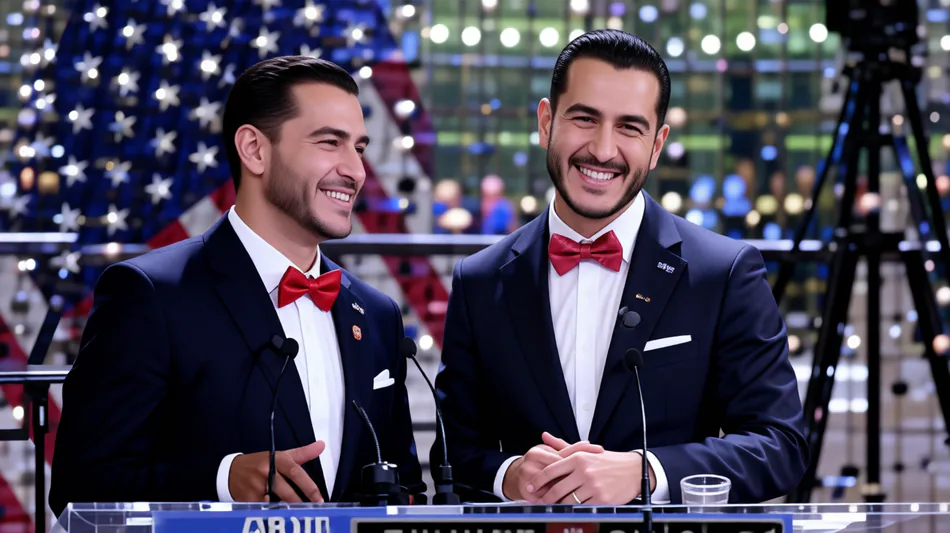
Abdul El-Sayed Wins Michigan Senate Race, Signaling Democratic Shift

Abdul El-Sayed has won the U.S. Senate seat in Michigan, a result that bolsters the progressive faction within the Democratic Party while exposing deep internal fractures. The victory by the Muslim candidate of Egyptian descent marks a significant shift in one of the nation’s most critical swing states, drawing both praise from the left and sharp criticism from establishment figures.
Abdul El-Sayed has secured victory in the U.S. Senate election in Michigan, a result that reinforces the influence of the progressive wing within the Democratic Party and intensifies internal debates over the party’s political trajectory. The win in a state historically pivotal to national elections underscores a shifting demographic and ideological landscape within the Democratic coalition.
El-Sayed, a Muslim son of Egyptian immigrants who identifies as an anti-monopolist, aligns himself with the policy platforms of Senator Bernie Sanders and Representative Alexandria Ocasio-Cortez. His platform includes sharp criticism of Israel and Washington’s political institutions. This profile has positioned him as a target for conservative opponents, particularly in Michigan, which has flipped between parties in recent cycles, voting Republican in 2016 and 2024 under Donald Trump.
The victory has drawn support from prominent Democratic figures. Former President Barack Obama campaigned for El-Sayed at a rally in Detroit, endorsing his candidacy. Representative Ocasio-Cortez highlighted the broader implications of the result on social media prior to the midterms, stating, "If someone like Abdul wins in a state like this, it means we can win anywhere."
However, the election has also exposed significant rifts within the party. Haley Stevens, a former Democratic primary candidate and staunch supporter of Israel, broke with her party by endorsing Republican candidate Mike Rogers just days before the vote. The split followed months of tension regarding El-Sayed’s stance on Israel and his refusal to condemn a campaign advertisement funded by his supporters that linked Israel to American inflation.
Stevens cited personal exclusion from El-Sayed’s campaign as the reason for her defection, stating in a video message, "Abdul explained that I am no longer welcome in his campaign and should stay away. He is right. That is why I am supporting Rogers for U.S. Senate." Her decision triggered immediate backlash, with some staff members resigning and calls from within the party for her expulsion.
El-Sayed’s win in Michigan, following similar progressive successes in New York, signals a potential realignment of Democratic priorities ahead of the 2028 presidential election. While the outcome strengthens the party’s left flank, it also raises questions about electoral strategy in swing states where centrist voters may be alienated by more radical positions.
D.Ryan--IP