Tears, fear, anger: relatives of Spain train crash dead await fate / Photo: Javier SORIANO - AFP

Marisa Liebana could barely hold back her tears as she sought news about her nephew Francisco Jose, one of the 69 victims of this week's high-speed rail crash in Spain.
Francisco Jose, 32, worked in Madrid and had caught a train south to the region of Andalusia on Wednesday to spend a few days with his parents. He was never seen again.
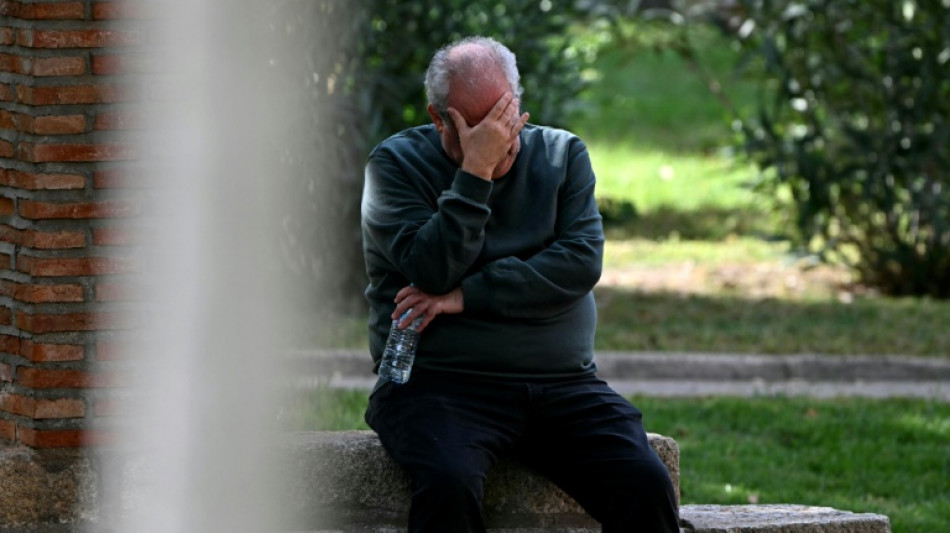
"The outcome has been very tough and very sad," Marisa said in the central city of Toledo, which has received most of the bodies from the collision outside the village of Urda.
"He was in the prime of his life," added Marisa, who said she felt "powerless" as she accompanied her brother Cecilio outside a reception centre for the victims' relatives in Toledo.
Inside the building, Civil Guard officers confirmed the dreaded news that their nephew had been found dead.
"We are devastated," Cecilio said, echoing the sentiment of the dozens of families affected by one of Europe's deadliest train disasters this century.
His sister, Francisco Jose's mother, could not come to Toledo. "She is distraught. She is seeing psychologists, receiving treatment, and she's in a really bad way," explained Marisa.
- 'Frustrated, outraged' -
Forensics teams are working around the clock and have identified 12 bodies, but for many relatives the wait is proving unbearable.
Esther San Emeterio, who is waiting for news of her brother Pepe, said the "anxiety" her family was experiencing was "crossing a line".
"Last night I went to bed incredibly frustrated, outraged, ashamed that no one is telling us anything."
Javier Barrio, whose wife Carmen de Santana had caught the train as one of her final work-related trips before her retirement, said "we are doing what we can, crying."
No DNA match or death certificate has been issued confirming her death, but Barrio is resigned to the worst, faced with the "extremely remote" chance of finding her alive.
"I've got my two children here who are supporting me a lot, but we're having a really hard time," he said.
Other families preferred not to speak as they paced up and down the area, overcome with shock, some with tears welling in their eyes.
Others found solace in an embrace with a loved one.
Ricardo, who is the friend of a family that suffered a bereavement, said the victim's parents had endured three days without knowing what had become of their child.
"And now he's in a body bag. It's incredibly harsh," said Ricardo.
- 'Scared' of train travel -
This week's accident is Spain's second high-speed rail disaster this year -- a double blow to a network that had been a source of national pride.
Another collision between two trains in the southern region of Andalusia in January killed 46 people on the same line linking Madrid to the city of Seville.
"Who's going to get on a train now? Now you're scared when you do," said Cecilio, who wants such disasters to never happen again.
Spain was observing the second of three days of national mourning on Friday, with the public demanding answers just weeks before an early general election on November 29.
The right-wing opposition is already demanding the resignation of the transport minister and has lambasted Socialist Prime Minister Pedro Sanchez, who is seeking re-election.
"Lots of lives have been lost in nine months. I think this should make everyone reflect -- the whole of society, the politicians -- about why this is happening in the 21st century," Cecilio said.
"I am not blaming one side or the other, but something is going wrong here."
A.Doyle--IP